Earth / Arts
FAGUS Tasmania’s Highland Palaeoendemics
Palaeo means ancient and endemic means restricted in range. So palaeoendemic species are often referred to as ‘living fossils’ that persist in isolated pockets. Found nowhere else on Earth, Tasmania’s ancient botanical survivors nestle in remote mountain vales, along the shores of alpine tarns and on rocky, exposed ridgelines. Climate change has placed Tasmania’s palaeoendemics at the forefront of an unfolding crisis.
About the project
Tasmania’s highland pine and deciduous beech communities-ancient, rare and beautiful-are central to the identity of wild Lutruwita/Tasmania. They are slow-growing and long-lived.
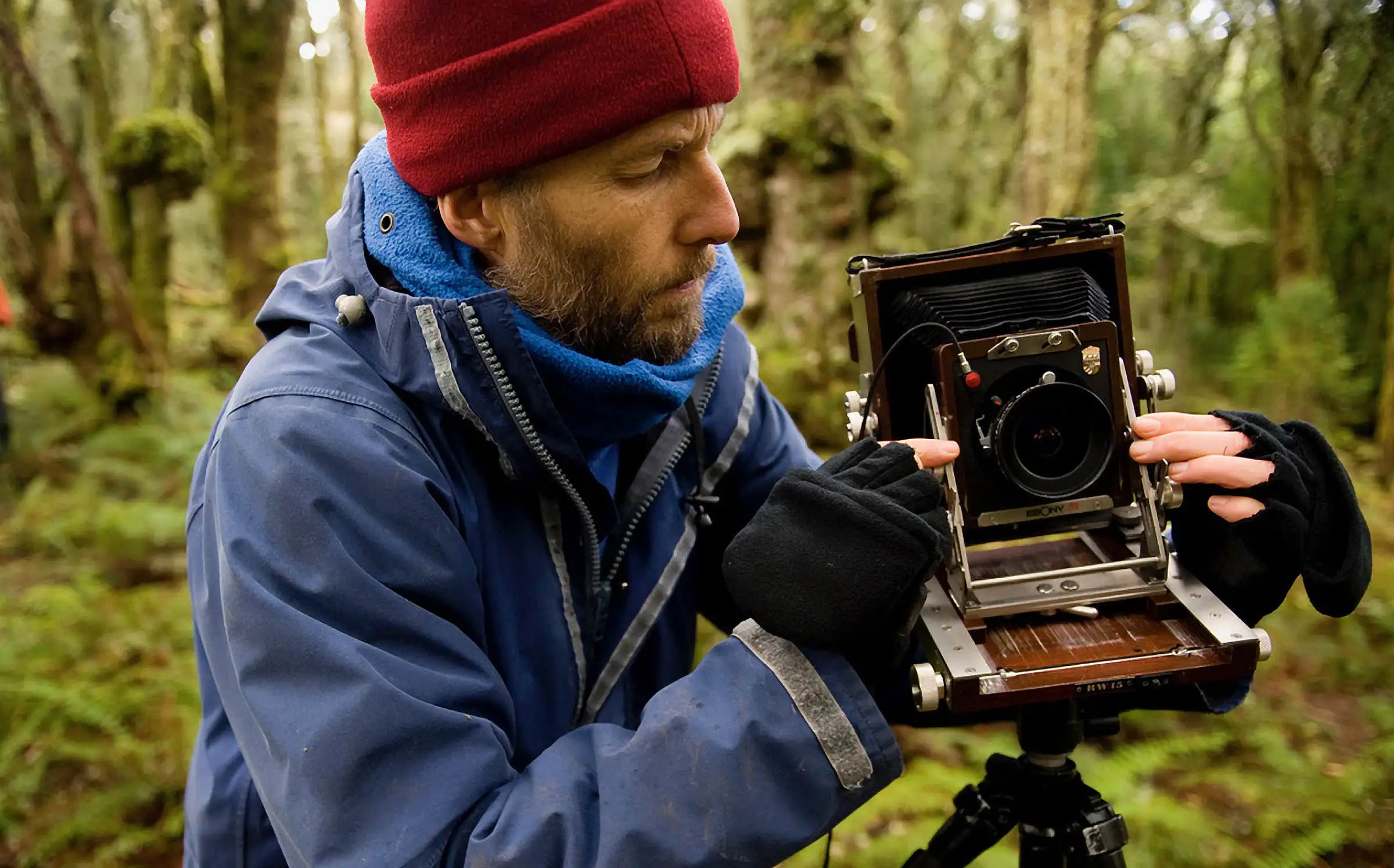
OUTSIDE THE BOX / Earth Arts Rights is partnering with renowned landscape and wildlife photographer Rob Blakers to deliver the FAGUS : Tasmania’s Highland Palaeoendemics project.
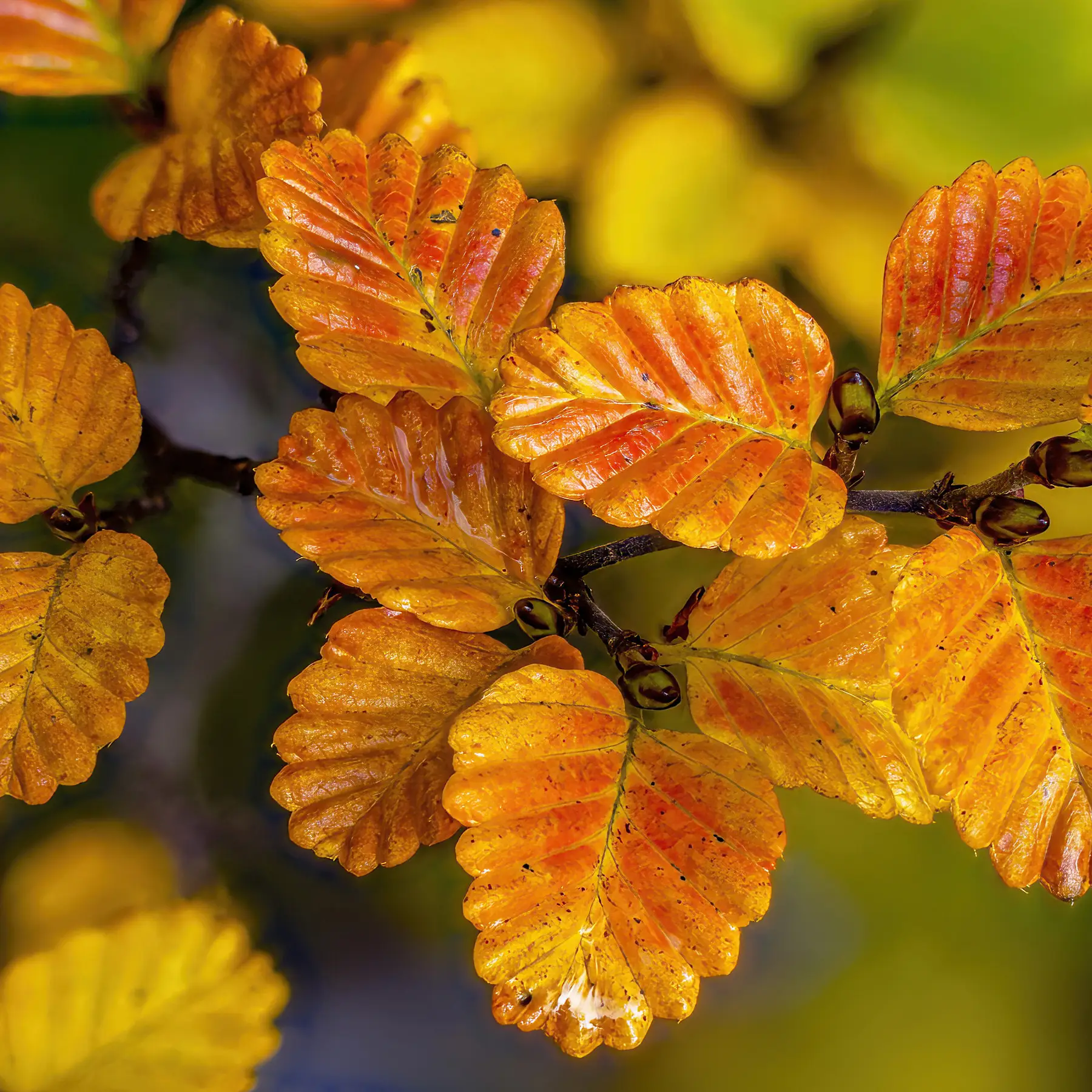
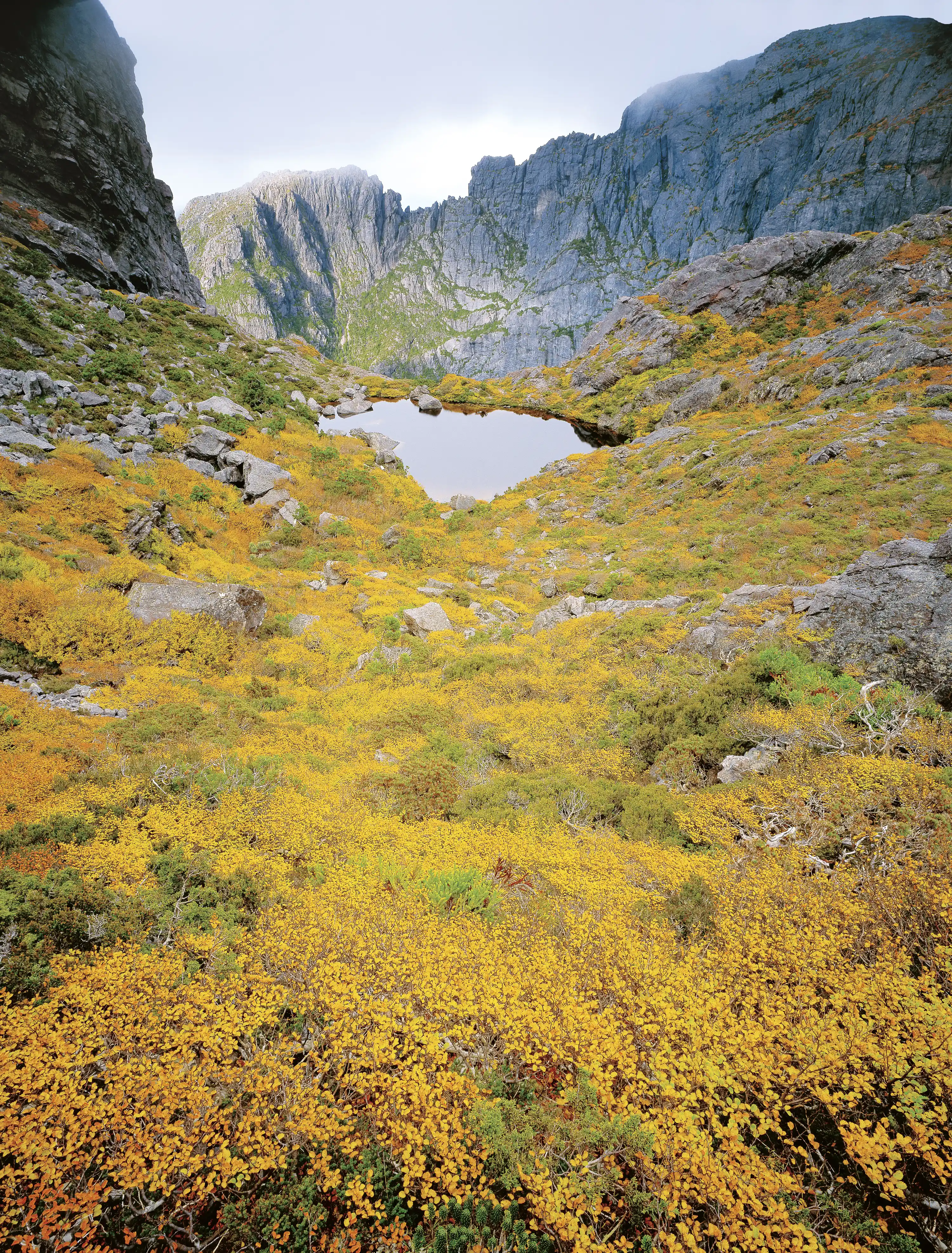
This project aims to raise awareness of the extraordinary value, beauty and vulnerability of these unique highland palaeoendemic communities of which the spectacular deciduous beech, Nothofagus gunni (‘fagus’) is the best known. Fossil records show that fagus has existed in Tasmania for over 35–40 million years. Individual fagus trees can live for at least 600 years. Every autumn, triggered by shorter daylight hours and colder temperatures, fagus prepares for its winter dormancy. The verdant green leaves first turn shades of yellow and orange. If the nights are particularly cold and frosty the leaves can turn a deep red. The riot of autumn colour is very short-lived, often lasting only a few weeks before the leaves drop. The annual autumn pilgrimage to observe the ‘turning of the fagus’ is a Tasmanian tradition.
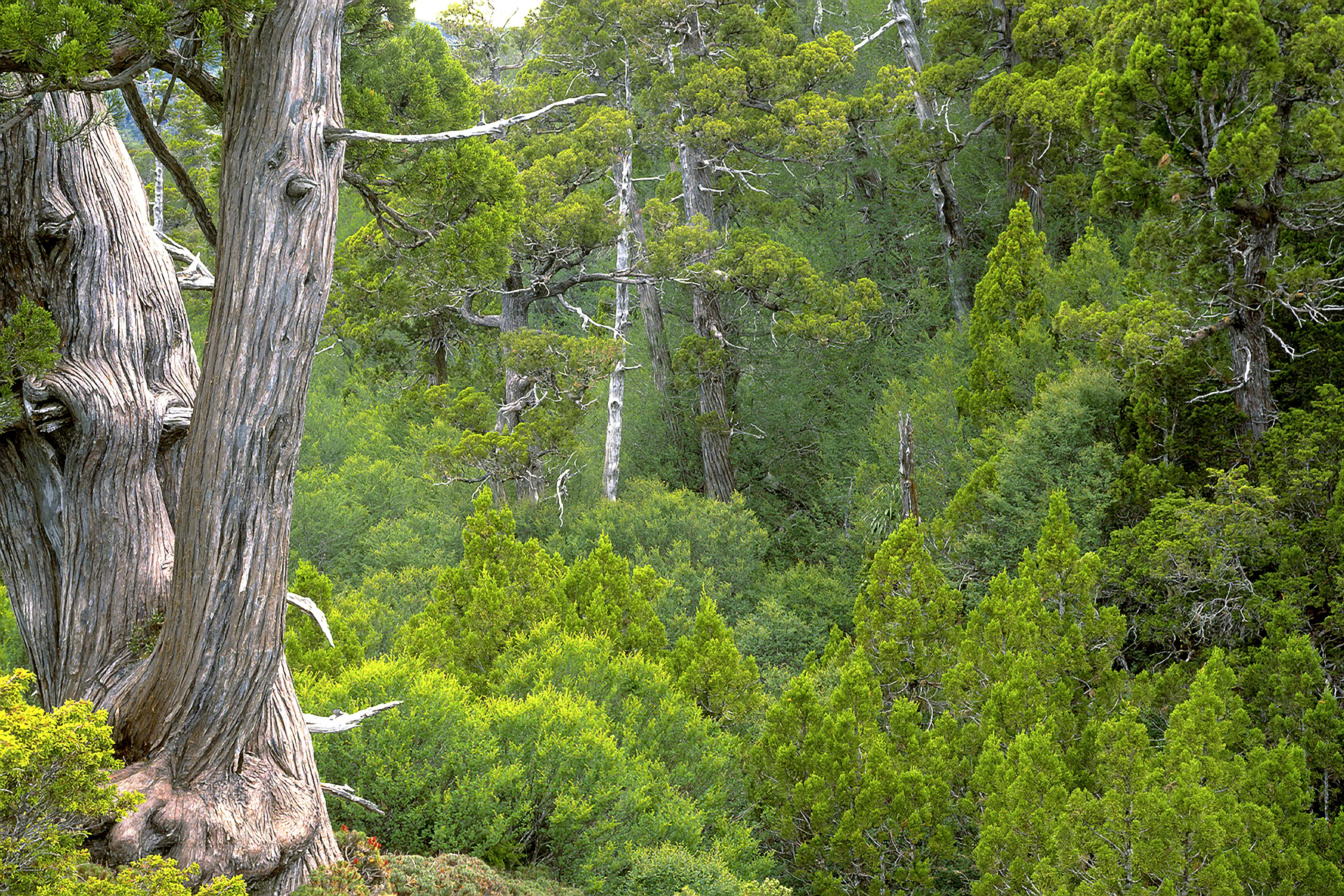
Pencil pine (Athrotaxis cupressoides) grows up to 20 metres high and has small, scale-like leaves with a rope-like conical shape. The much taller King Billy pine (Athrotaxis selaginoides) can reach up to 40 metres high and features larger, claw-like, sharp leaves. These conifers have likely existed continuously in Tasmania for the last 50–60 million years. Individuals live for up to 1,500 years.

Climate Fires
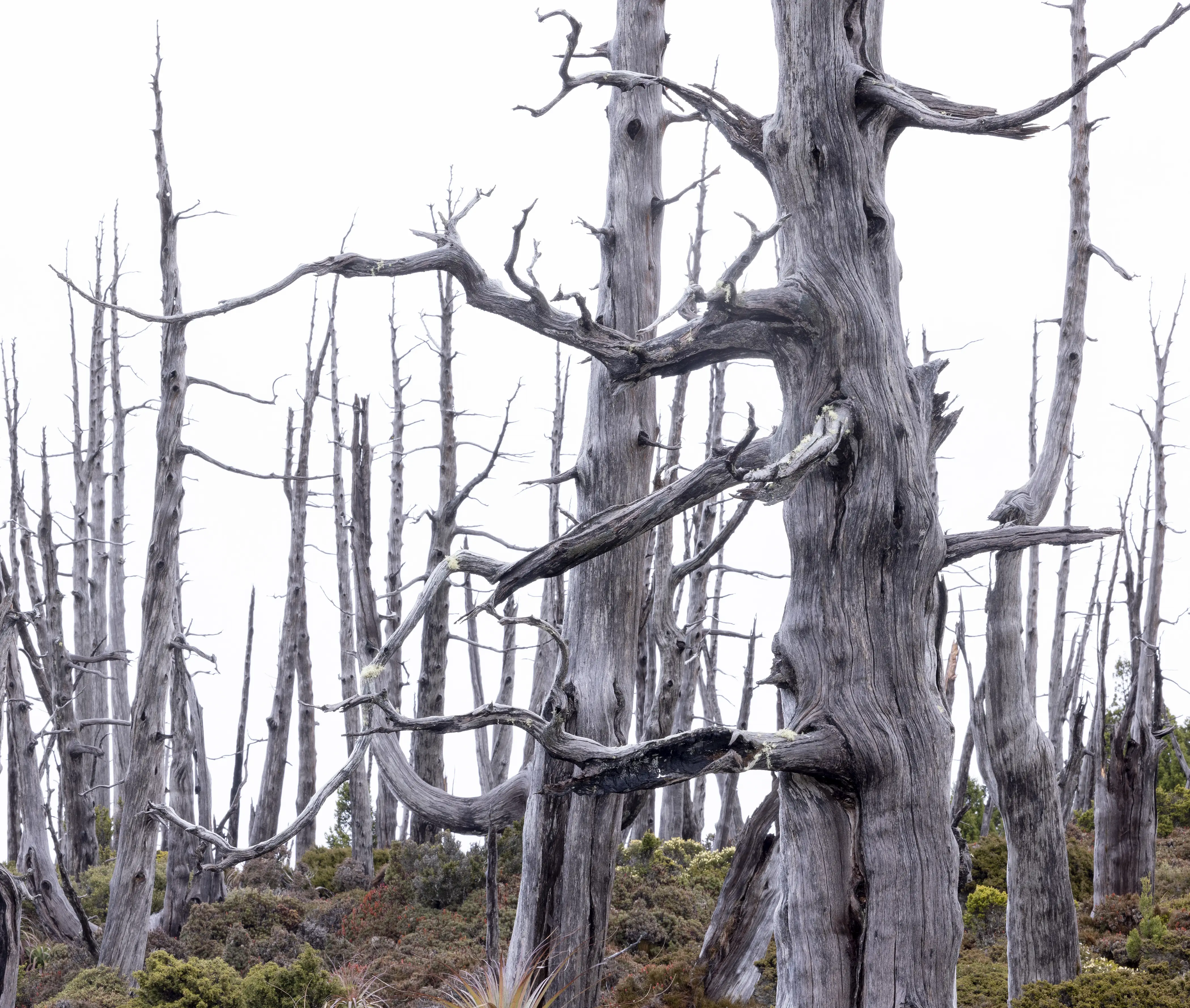
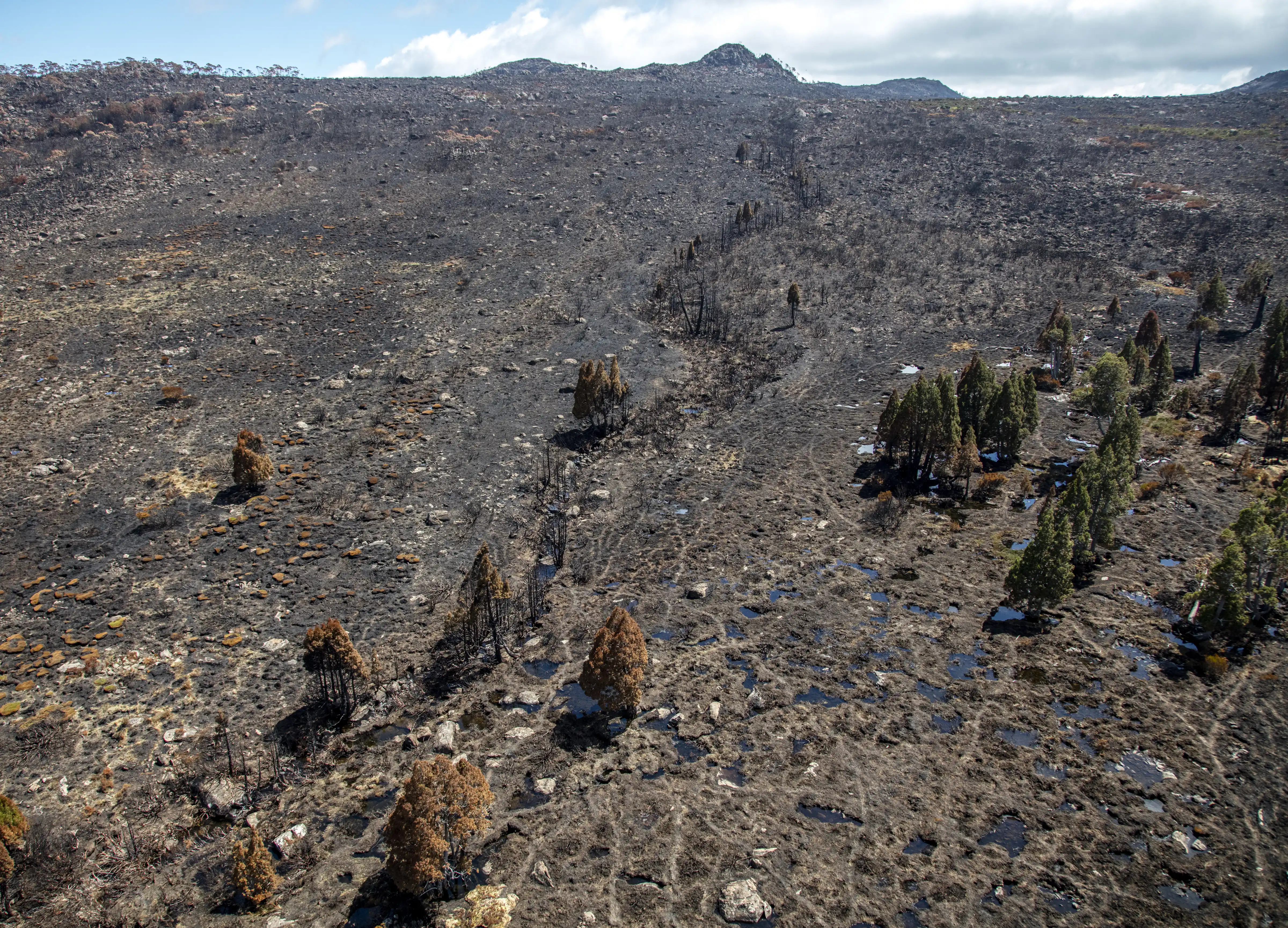
Palaeoendemic species are extremely fire sensitive. Fire kills the trees outright. It also destroys their seed and the deep peat soil, accumulated over millennia, that the trees depend on. Once gone, these irreplaceable remnant forests and their living soils are lost forever.
Since the early 2000s the frequency of dry lightning strikes in Tasmania’s highlands has increased dramatically. Resulting wildfires in 2016, 2019 and 2025 burned significant swathes of this ancient Gondwanan vegetation. These fires are the unprecedented and direct result of human induced climate change.
Project Elements
The Fagus project has three main elements—a large format, hard case publication, a short film and an exhibition—that will work together to advocate for climate action and a cultural shift in thinking by government decision makers and fire fighting agencies that is essential to protecting and conserving these endangered communities.
Publication
The book will feature essays by scientists and artists, situating these unique palaeoendemic botanies in vast geological time. It will include over 50 images, captured on expeditions into the Tasmanian wilds over the last four decades.
Film
Approximately 20 minutes in length, professionally narrated and with a sound track by local musicians, the film will feature extraordinary footage from the Tasmanian highlands, with an informative scientific commentary.
Exhibition
The book and film will be released to coincide with the launch of a major photographic exhibition at Wild Island, Hobart in April 2027 to coincide with the next ‘turning of the fagus’.
Support
OUTSIDE THE BOX / Earth Arts Rights and Rob Blakers acknowledge the funding support from Bellendena Small Grants Scheme, Chris Bell (Laurel Press) and all contributors to the Tasmanian Gondwana Film crowd funding campaign.
Landscape images by Rob Blakers
Portrait of Rob Blakers by Matt Newton